
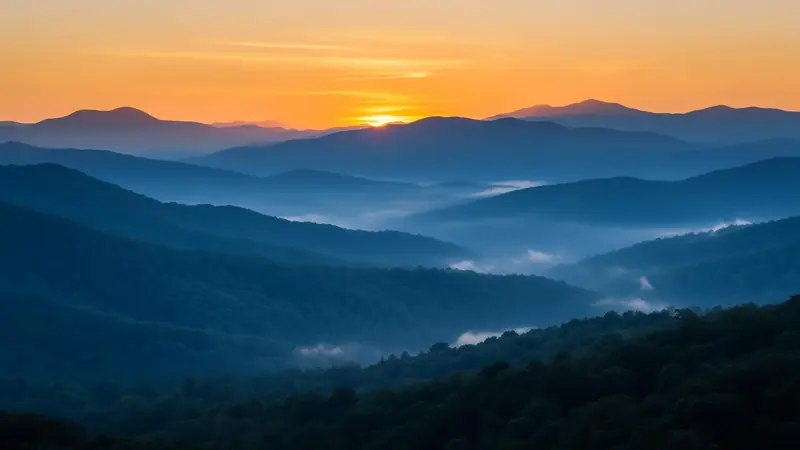
Four seasons, several elevations, and no single perfect week. Here is how to choose your moment in the Smokies without letting a foliage forecast run your life.
Everybody wants the best week.
The leaves at their brightest. The weather behaving itself. The roads pleasantly empty. The cabin with the view available at an agreeable price. Preferably all at once, and during the exact school holiday already circled on the calendar.
The Smoky Mountains are generous. They are not taking special orders.
There is a more useful way to choose. Start with the experience you want, then learn what the season asks of you. A spring trip built around the forest floor is different from a summer family vacation. An October foliage trip needs a different temperament from a winter weekend built around a good cabin and a slow morning.
The quick answer: Come in mid- to late April for peak wildflowers at lower elevations. Come in June for rhododendron and mountain laurel. Come mid-October to early November for fall color below 4,000 feet, and expect October to be the park's busiest month. Come December through February for a quiet, cabin-centered trip, with the park's high roads closed. Summer suits school calendars; plan around afternoon storms.
| Season | Months (NPS) | Low-elevation weather | Highlight | Watch for |
|---|---|---|---|---|
| Spring | March–May | Mid-April days usually in the 70s | Wildflower peak mid- to late April | Snow possible up high in March |
| Summer | June–August | July–August highs in the 90s | Laurel, rhododendron, flame azalea | Afternoon thunderstorms |
| Autumn | September–mid-November | Driest season; first frost often late September | Fall color mid-September to early November, by elevation | October is the busiest month |
| Winter | Mid-November–February | About half of days reach 50°F | Quiet trails, cabin time | Kuwohi Road and Roaring Fork closed |
Seasons, weather, and bloom timing from the National Park Service. Exact dates shift every year.
The most useful weather question is "at what elevation?"
Park elevations run from about 875 feet to 6,643 feet, and the National Park Service says temperatures can differ 10–20°F from base to summit. Rainfall runs from about 55 inches a year in the lowlands to 85 inches at Kuwohi, the park's highest point. Checking "Gatlinburg weather" is a start. It is not the whole assignment if your day includes high mountain country.
Sunshine on your deck says nothing about the weather at 6,000 feet. The difference can decide whether a drive makes sense, whether the view you planned will be visible, and whether an outing belongs on today's schedule at all. Use the park's weather page, which carries separate forecasts for Gatlinburg and Cherokee, then check a forecast for where you're actually going.
Spring (March–May): the season for people who notice things
Wildflowers peak in mid- to late April at lower elevations and a few weeks later on the highest peaks, according to the NPS wildflower guide. The show starts with spring ephemerals: plants that emerge February through April, flower while sunlight still reaches the forest floor, and are gone by May or June.
Spring weather moves fast. Snow can fall any time in March at higher elevations. By mid-April, lower-elevation days usually reach the 70s. April averages more than 4 inches of rain, mostly as afternoon showers.
This gives a spring trip a different center of gravity. You don't need to make every outing about a summit. A woodland walk can reward attention to small things: a change in leaf shape, a patch of flowers, new green along a stream. You can cover less ground and still have more to talk about at dinner.
Build the day around observation rather than conquest. The park's common spring wildflowers guide helps you tell spring beauty from bloodroot. For a deeper dive, the park hosts the week-long Spring Wildflower Pilgrimage each spring, with guided walks and programs. Photograph what you find and leave the plants where they belong.
Summer (June–August): plan for the people taking the vacation
July and August highs reach the 90s at lower elevations, with comfortable evenings in the 60s and 70s. Up high is a different climate: on Mount Le Conte, temperatures above 80°F are extremely rare. Afternoon thunderstorms are common all summer, so start long hikes early.
Summer is often the season you choose because it is the season your household can travel. That is a legitimate reason. There is no prize for explaining to a nine-year-old that October would have been more atmospheric.
Plan around your group rather than an idealized travel diary. If a full attraction day is a priority, give it a full day. If your family fades after lunch, admit that before buying three experiences with fixed entry times.
The flower season doesn't end with spring. Mountain laurel blooms from early May through June. Catawba rhododendron usually peaks along Newfound Gap Road in the first half of June. Flame azalea blooms in April and May at low to mid elevations and reaches the high balds, including Gregory Bald, in late June, per the park's blooming shrubs guide.
One summer bonus: Cades Cove Loop Road is closed to vehicles on Wednesdays, typically May through September, which makes it a walker's and cyclist's road for the day.
Autumn (September–mid-November): follow the landscape, not a promise of peak color
Fall color in the Smokies typically develops above 4,000 feet in early to mid-October and peaks below 4,000 feet between mid-October and early November, according to the NPS fall color guide. Color can start at the highest elevations as early as mid-September. Exact peak dates shift every year.
Autumn is also the driest stretch of the year, with September highs in the 70s and 80s falling to the 50s and 60s by early November. First frosts often arrive in late September.
October is the park's busiest month, and the NPS warns travel times can run hours longer than usual. Those facts belong together: a spectacular season attracts people who want to see a spectacular season. The park's own advice is practical. Buy your parking tag at home. Have a Plan B, because popular lots fill. Try quieter drives like the Foothills Parkway or Lakeview Drive.
For a short visit, organize geographically. One area explored well beats several scenic routes connected by a day of traffic. Keep dinner plans compatible with that decision. Nothing improves a slow mountain return quite like knowing you are not already late for a reservation elsewhere.
Winter (mid-November–February): let the cabin earn its place
Winter in the Smokies is milder than most visitors expect. About half of winter days reach 50°F or warmer, and highs occasionally hit the 70s. Lower elevations see snow of an inch or more just 1–5 times a year. Snow is far more common up high, especially in January and February, where a single storm can drop two feet.
Some of the park closes. Under the 2026 seasonal road schedule, Kuwohi Road and the Roaring Fork Motor Nature Trail closed after November 29 and reopen in April. Newfound Gap Road, Little River Road, and Cades Cove Loop Road stay open year-round, weather permitting. Newfound Gap Road closes for ice more often than visitors expect, so check current conditions the morning you go.
That makes winter a cabin season. Choose a place you want to spend time in. A hot tub on a cold night does a lot of work. Bring the ingredients for a proper breakfast. Build a few outings around conditions, and permit yourself to have an afternoon with no measurable accomplishment.
Before you book, ask how to reach the cabin, who sends access updates, and what the manager recommends when winter weather hits. The approach, steps, and parking matter as much as the view.
The reward is a trip that feels deliberate. You are choosing a winter experience, with its own pleasures and requirements, rather than asking it to behave like a discounted version of July.
Special events: the synchronous fireflies and other anchors
The synchronous fireflies at Elkmont flash for about 8 nights a year, usually between late May and early June, and you need a lottery reservation to see them. The park limits access to protect the fireflies. Here is the 2027 process, per the NPS:
- Week of April 19, 2027: the park announces viewing dates.
- Week of April 27: the lottery opens on Recreation.gov. Entry costs $1.
- Early May: entrants learn whether they were selected. Winners pay $29 for a vehicle reservation on one night.
The display depends on soil temperature, so dates move. Since 1993, peak activity has ranged from the third week of May to the third week of June. Decide whether you would still want the trip without a reservation. If yes, plan enthusiastically and keep the fireflies in proportion.
Use the same discipline for holiday light shows, concerts, and seasonal attractions. Check the operator's current calendar, and give an evening event enough space that it doesn't turn the whole day into a race.
Build the trip around one priority and two alternatives
Here is a useful exercise. Finish the sentence, "We would be disappointed if we came home without…" Choose one answer for the group: fall scenery, a day at Dollywood, time together at the cabin. That becomes the anchor.
Then choose two alternatives you would enjoy if weather or access changes the plan. Keep them close. A rainy-day alternative that requires an unwanted cross-region drive is more of a negotiation than an alternative.
For a spring couple's trip, the anchor might be a woodland walk in late April, with studios and a museum on other days. For a summer family trip, a full theme park day surrounded by easier mornings. For an October visit with grandparents, scenery the whole group can reach, rather than a hike only half the family wants.
We manage cabins at Douglas Lake, near Dollywood, on the Spur, and in Eagle Springs. In winter, our Douglas Lake cabins and The Tranquil Treat both come with hot tubs. Please tell us your season and your one priority, and we'll tell you which cabin makes it easy. For where to base yourself, see our guide to where to stay in the Smoky Mountains.
Questions about the best time to visit the Smokies
When is peak fall color in the Smoky Mountains?
Fall color typically develops above 4,000 feet in early to mid-October and peaks below 4,000 feet between mid-October and early November, according to the National Park Service. The highest elevations can start turning in mid-September. Exact dates shift every year, so build a few days of flexibility into an October trip.
What is the busiest month in the Smokies?
October is the park's busiest month, according to the NPS, and travel times can run hours longer than usual. Buy your parking tag before you arrive and have a backup plan for full parking lots.
When is the best time to see wildflowers in the Smokies?
Spring wildflowers usually peak in mid- to late April at lower elevations and a few weeks later on the highest peaks. For flowering shrubs, come in June: mountain laurel blooms early May through June, and Catawba rhododendron peaks along Newfound Gap Road in the first half of June.
When do the synchronous fireflies happen?
The synchronous fireflies at Elkmont are viewable on about 8 nights a year, usually late May to early June. Access is by lottery on Recreation.gov; the 2027 lottery opens the week of April 27. Entry costs $1, and winners pay $29 for a vehicle reservation.
Does it snow in Gatlinburg?
Rarely in town. Lower elevations in the Smokies see snow of an inch or more just 1–5 times a year, according to the NPS. Snow is far more common at high elevations, especially in January and February.
Which park roads close in winter?
Kuwohi Road and the Roaring Fork Motor Nature Trail close for winter; under the 2026 schedule, both closed after November 29 and reopen in April. Newfound Gap Road, Little River Road, and Cades Cove Loop Road stay open year-round, weather permitting.
Is spring or fall better for a Smoky Mountain vacation?
Choose spring (April) if wildflowers and spring green appeal to you. Choose fall (mid-October to early November) if foliage is the priority and you can handle October traffic. Both work for a trip that mixes food, culture, town time, and outdoor plans.
Is winter a good time for a cabin trip?
Yes. About half of winter days reach 50°F or warmer at lower elevations, and snow in town is rare. Choose a cabin you'll enjoy spending time in, ask about winter access before booking, and expect some high-elevation park roads to be closed.
Use SmartStay's regional guides to choose the places and experiences that suit your season.