
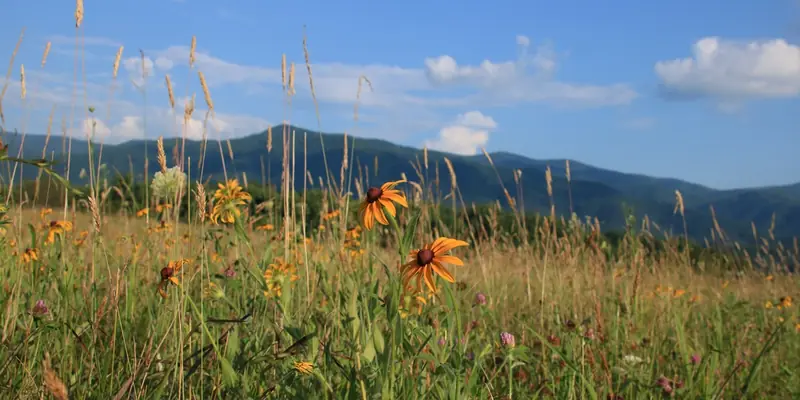
Cherokee homelands, working mountain communities, timber towns, and a living craft tradition. The region has a much longer story than its vacation photographs suggest.
A log cabin is an image before it is a building.
It promises a particular idea of the mountains: independence, warmth, a simpler life, perhaps a rocking chair placed at exactly the right angle. The image is powerful. It is also a fairly thin introduction to the people who actually made their lives here.
The Smoky Mountains have been homeland, farmland, workplace, refuge, and destination. Understanding that history changes a visit. The Old Mill becomes an economic engine rather than a decorative landmark. A preserved church becomes evidence of community. A Cherokee place name becomes an opening to a history that did not begin with tourists or European settlers.
You do not need to turn a vacation into a graduate seminar. A little curiosity will do.
The quick answer: The Smokies are Cherokee homeland, and the Eastern Band of Cherokee Indians still lives on the Qualla Boundary in North Carolina. European settlers farmed valleys like Cades Cove from the 1820s. Logging transformed the mountains in the early 1900s. The national park, established in 1934, displaced more than 1,200 landowners while saving the forest that remained, and Gatlinburg's craft tradition grew out of a settlement school founded in 1912.
Smoky Mountains history at a glance
| Year | Event |
|---|---|
| 1817 | Isaac Love builds an iron forge on the Little Pigeon River |
| Early 1820s | European settlers arrive in Cades Cove |
| About 1830 | William Love builds the gristmill now called the Old Mill |
| 1838–1839 | Forced removal of the Cherokee (the Trail of Tears) |
| Early 1900s | Large-scale logging; boom towns at Elkmont, Tremont, Smokemont, and Proctor |
| 1912 | Pi Beta Phi Settlement School founded in Gatlinburg |
| 1926 | Congress authorizes the national park; the Arrowcraft Shop opens in Gatlinburg |
| 1933–1942 | Civilian Conservation Corps builds park roads, trails, and structures |
| 1934 | Great Smoky Mountains National Park formally established |
| 1940 | President Franklin Roosevelt dedicates the park at Newfound Gap |
| 1948 | Museum of the Cherokee People established |
| 1969 | The settlement school's craft program takes the name Arrowmont |
| 2024 | Cherokee name Kuwohi restored to the park's highest peak |
Begin with Cherokee people, in the present tense
Any serious account of this region begins before the park and before the towns most visitors recognize.
The Smokies are Cherokee homeland, and Cherokee history here is living history. Cherokee, North Carolina, sits on the Qualla Boundary, the sovereign land of the Eastern Band of Cherokee Indians and, in the words of the Museum of the Cherokee People, ancestral homelands of all Cherokees. Established in 1948, the museum is one of the longest-operating tribal museums in the country. Its mission is to preserve and perpetuate the history, culture, and stories of the Cherokee people. That makes it the right place to start: interpretation from an institution centered on Cherokee people and their own representation.
Removal, and the people who remained
In May 1838, U.S. troops and state militia forcibly evicted more than 16,000 Cherokee people from their homelands in Tennessee, Alabama, North Carolina, and Georgia, according to the National Park Service's Trail of Tears history. More than a thousand died on the journey west, and perhaps several thousand more from its consequences. The removal was completed by the end of March 1839.
Not everyone left. Several hundred Cherokee remained in the North Carolina mountains. Through their agent, William Holland Thomas, they pooled money to buy back tracts of land that became the Qualla Boundary, according to NCpedia. Their descendants are the Eastern Band of Cherokee Indians.
Cherokee life in the region did not end in 1838, and it did not stand still afterward. Many Eastern Band families made their living in the logging economy into the 1940s, and the creation of the national park brought new opportunity, with one park entrance routing visitors through the Qualla Boundary. The Museum of the Cherokee People and its cultural partners helped build Cherokee's tourist economy in the late 1940s and 1950s.
For a visitor, the practical response is straightforward. Make time to learn from Cherokee institutions. Follow the guidance of cultural sites. Curiosity travels well when it is accompanied by respect. For planning a Cherokee day, see the Cherokee section of our guide to where to stay in the Smoky Mountains.
Why the name Kuwohi belongs in the conversation
On September 18, 2024, the U.S. Board on Geographic Names approved a request from the Eastern Band of Cherokee Indians to restore the Cherokee name Kuwohi (koo-WHOA-hee) to the park's highest peak, according to the NPS announcement. Kuwohi means "mulberry place." Older maps and many travel guides still say Clingmans Dome.
For someone planning a drive, the change can look like a matter of matching an old map to a new sign. It's more than that. The mountain had a Cherokee name long before it had an English one. Use Kuwohi. It's the mountain's name, and now it's the official one.
Mountain communities ran on work, trade, and each other
There is a habit of imagining earlier mountain residents as solitary figures living entirely outside the wider world. It makes for a tidy picture. It leaves out much of what made a community function.
The NPS history of the park's people describes farms, churches, mills, and schools. The landscape was worked. Food had to be grown and processed. Buildings required maintenance. Families depended on skills, exchange, and relationships.
Cades Cove is the best place to see this. Before European settlement, Cherokee people traveled through the valley to hunt deer, elk, bison, and bears. The first European settlers arrived in the early 1820s, according to the park's history of the valley. Baptist and Methodist churches followed within the decade, and by 1850 the valley held 685 people. It was not uncommon for a household to have ten to twelve children.
Look at a preserved farmstead with that in mind. A barn, a corn crib, a smokehouse, and a dwelling each meant a different kind of labor. The view that feels restful to a visitor once contained a great many jobs that could not be postponed because the weather was attractive.
That shift does not make the place less beautiful. It gives the beauty company. For planning a visit, see our first-visit guide to the park.
A mill tells you how a place worked
In Pigeon Forge, the Old Mill is a working lesson in local economics. Isaac Love built an iron forge on the Little Pigeon River in 1817. Around 1830, his son William built a gristmill beside it, according to the Old Mill's history.
By 1842, the area's first post office operated inside the mill, and William Love, as postmaster, chose the town's name. Pigeon Forge honored the passenger pigeons that once filled the sky and the forge next door. The mill survived a 1920 flood that tore away its lower floor and wheel, and it was added to the National Register of Historic Places in 1975.
A mill mattered because grain needed processing. Water power, machinery, and skilled work brought people to one place for one purpose. Once you know that, the familiar photograph begins to describe an economy. Cornmeal, flour, and storage weren't decorative expressions of mountain identity. They were how life worked.
Logging changed the mountains, and the lives around them
Large-scale logging arrived in the early 1900s. Within 20 years, according to the NPS, the largely self-sufficient mountain economy was almost entirely replaced by dependence on store-bought goods, manufactured items, and cash. Boom towns sprang up at sites that still bear their names: Elkmont, Smokemont, Proctor, and Tremont.
Loggers were cutting fast. When the park was established, the forest it saved was only the roughly 20% that remained uncut within its boundaries. Keep that number in mind when you look across a wooded hillside and assume you're seeing untouched wilderness. Much of what you see is regrowth.
It also complicates the familiar picture of mountain self-sufficiency. Paid work and wider markets changed households within a generation. An apparently quiet landscape may have had a very loud chapter.
The national park preserved a landscape and changed a home
The park came together in three steps. Congress authorized it on May 22, 1926, when President Calvin Coolidge signed a bill allowing its establishment once North Carolina and Tennessee secured the land. The first deeds went to the federal government on February 6, 1930, according to Friends of the Smokies. The park was formally established in 1934, and President Franklin Roosevelt dedicated it on September 2, 1940, at the Rockefeller Memorial at Newfound Gap.
Its creation protected a remarkable landscape, and it required people to leave their homes. More than 1,200 landowners had to leave their land once the park was established, according to the NPS. Not everyone went quietly or at once. In Cades Cove, some families sold willingly. Others resisted; resident John W. Oliver went to court several times. Some signed life leases that let them stay for the rest of their lives, in exchange for less money and park rules on hunting, trapping, and timber cutting.
They left behind farm buildings, mills, schools, and churches. More than 70 of those structures have been preserved, giving the park the largest collection of historic log buildings in the East. A preserved home can therefore carry more than one meaning. It is a resource protected for public understanding. It is also connected to a family whose relationship with the place was more immediate than ours will ever be during a short visit.
The Civilian Conservation Corps built much of what you use
From 1933 until 1942, the Civilian Conservation Corps, a New Deal work-relief program, did most of the park's early restoration and building, according to the North Carolina History Project. Young enrollees built roads, trails, fire towers, and other structures. Some of what makes the park accessible today came out of the Great Depression.
Seen that way, a trail is also a human achievement. Conservation did not make human history disappear. It added another chapter to a landscape already full of it.
Craft in Gatlinburg is a living practice, with a school behind it
Gatlinburg's craft tradition has a specific origin. In 1912, the Pi Beta Phi Women's Fraternity founded a settlement school in Gatlinburg, focused on education, manual arts, and health care. In 1926, it opened the Arrowcraft Shop to sell local crafts, giving mountain makers a market. In 1945, it partnered with the University of Tennessee on a summer craft workshop, and in 1969 the school took the name Arrowmont, according to the University of Tennessee's Volopedia. Today, Arrowmont School of Arts and Crafts still teaches in Gatlinburg.
The Great Smoky Arts & Crafts Community, working since 1937 on an eight-mile loop east of downtown, is another way to meet working makers.
Across the mountains, Qualla Arts and Crafts Mutual in Cherokee gives visitors a place to engage with Cherokee artistic traditions, in their own cultural context.
Ask about a material. Learn the name of the person who made the object. Buying less and understanding more can produce a far better souvenir than a bag full of things that could have come from anywhere.
How to give history a place in the vacation
Choose one historical thread and let it shape a day.
- Cherokee history and culture: Spend a day in Cherokee, starting at the Museum of the Cherokee People, then Qualla Arts and Crafts Mutual. Check seasonal hours before you go.
- Mountain community life: Drive Cades Cove with the park's self-guiding tour booklet. Choose three buildings and learn what each was for.
- Industry and economy: Start at the Old Mill in Pigeon Forge, then drive to Elkmont, a former logging town inside the park.
- Craft: Explore Arrowmont's public offerings and the studios of the Great Smoky Arts & Crafts Community in Gatlinburg.
The Great Smoky Mountains Heritage Center in Townsend covers regional history across all four threads, with museum galleries and a village of historic buildings. A museum visit is more rewarding when you arrive with a question you want answered.
We manage cabins at Douglas Lake, near Dollywood, on the Spur, and in Eagle Springs. Our Gatlinburg office is on Glades Road. Tell us which thread interests you, and we'll help you build the day around it.
Questions about Smoky Mountain history
When was Great Smoky Mountains National Park established?
Congress authorized the park on May 22, 1926. It was formally established in 1934, and President Franklin Roosevelt dedicated it on September 2, 1940, at Newfound Gap. The gap between authorization and establishment came from the years North Carolina and Tennessee spent buying the land.
Why did people have to leave the Smoky Mountains?
The land was purchased to create the national park. More than 1,200 landowners had to leave once the park was established. Some sold willingly, some fought in court, and some signed life leases that let them stay for the rest of their lives under park rules.
Who are the Eastern Band of Cherokee Indians?
The Eastern Band of Cherokee Indians are descendants of Cherokee people who remained in the North Carolina mountains after the forced removal of 1838–1839. They bought back land that became the Qualla Boundary, the tribe's sovereign land in and around Cherokee, North Carolina.
What did the Civilian Conservation Corps do in the Smokies?
From 1933 to 1942, the Civilian Conservation Corps, a New Deal work-relief program, did most of the park's early restoration and building, including roads, trails, and other structures still in use.
Was the Smokies forest ever logged?
Yes. Large-scale logging began in the early 1900s. When the park was established, only about 20% of the forest within its boundaries remained uncut, according to the National Park Service.
Where can visitors learn about Cherokee culture?
Start with Cherokee-led institutions in Cherokee, North Carolina, including the Museum of the Cherokee People, Qualla Arts and Crafts Mutual, and the cultural attractions listed by Visit Cherokee. Check current exhibitions and seasonal hours before planning the day.
Explore our Smoky Mountain guides with a little more history in mind. The view gets richer.
Sources
- Museum of the Cherokee People – About
- NPS – Trail of Tears history
- NCpedia – Trail of Tears and the Eastern Band
- NPS – Kuwohi name restored
- NPS – People of the Smokies
- NPS – History of Cades Cove
- The Old Mill – History
- Friends of the Smokies – About
- North Carolina History Project – GSMNP
- UT Volopedia – Arrowmont
- Visit Cherokee – Culture